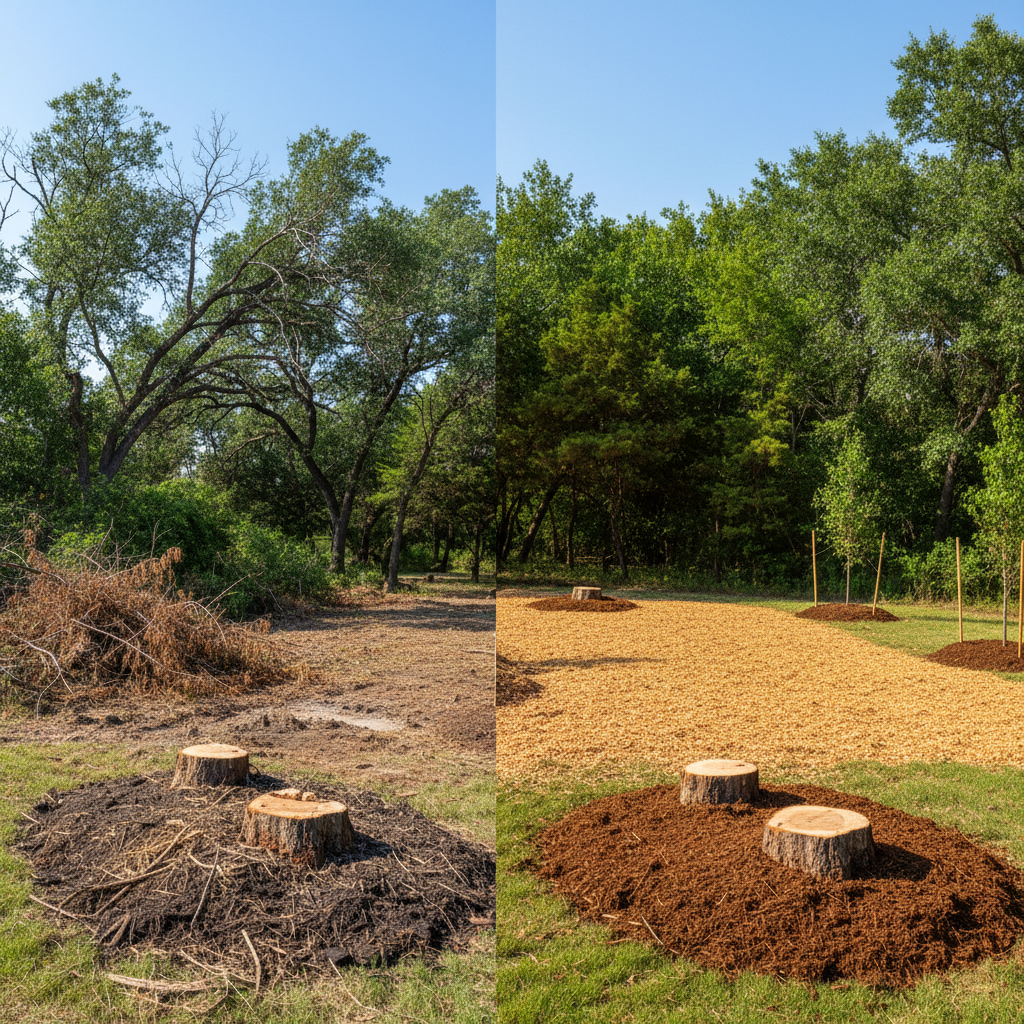
So, you’ve had a tree taken down. Maybe it was an old cedar elm that finally bit the dust, or a live oak that just got too cozy with the house. Now you’re staring at a stump. What’s next? You’ve really got two main choices: stump grinding or full stump removal. People ask me about this all the time, and honestly, there’s no magic bullet answer. It truly boils down to what you’re hoping to achieve and, naturally, how much you’re willing to spend.
Stump Grinding: The Quick and Easy Solution
Stump grinding is usually what most folks picture when they want a stump gone. We bring in a specialized machine — think of it as a really big, powerful saw on wheels — that grinds the stump right down into wood chips. Typically, we go about 6 to 12 inches below the surface. We can go deeper if you need it, of course. It’s pretty efficient, and for an average size stump, we can often wrap it up in an hour or two.
Cost & Appearance
Price-wise, grinding is almost always less expensive than a full removal. You’re simply paying for less labor and less time with heavy equipment. What’s left? A pile of wood chips and a hole where that stump used to be. You can totally use those chips as mulch, or we can haul them away for you. Then, just fill the hole with some good soil, plant a bit of grass, and poof! It’s like the stump was never even there.
Durability & Maintenance
The key thing to remember with grinding is that you’re not actually getting rid of the roots. The main stump is gone, sure, but the root system stays underground. For most people, this isn't an issue. Those roots will eventually break down and decay over time, though it can take years, especially for a big old oak. Sometimes, you might see some mushrooms pop up as the roots decompose, but that’s just nature doing its thing, nothing to worry about. You might also get some new sprouts, particularly from certain tree types like hackberries or elms. If they show up, you'll need to snip them off, but it’s usually not a huge chore.
Full Stump Removal: The Clean Slate Approach
Full stump removal means we’re not just grinding the part you can see. We’re actually digging out the entire stump and as much of the major root system as we possibly can. This typically calls for heavy machinery, like an excavator, to literally pull the whole thing out of the ground. It’s a much more involved process, no doubt about it.
Cost & Appearance
This option is definitely more expensive. You’re paying for more time, more specialized equipment, and often, a lot more disruption to your yard. When we’re finished, you’ll have a much larger hole in the ground, and we’ll have a significant amount of debris to haul away – the stump, the roots, and a good bit of dirt. The big upside? You end up with a completely clear area. No roots, no potential sprouts, just a big empty space ready for whatever you want to do next.
Durability & Maintenance
With full removal, you get total assurance. There are no roots left to decay, no mushrooms, no sprouts. It's a truly clean slate. This is the way to go if you’re planning to build something right where the tree was, maybe a new patio, an addition to your house, or even if you want to plant another tree in the exact same spot. You certainly don’t want old roots messing with new foundations or interfering with new root systems.
My Recommendation for Bee Cave Homeowners
For most folks right here in Bee Cave, especially with our notoriously rocky soil, stump grinding is usually the best bet. It’s cost-effective, less disruptive to your yard, and for 90% of situations, it does the job perfectly. You get rid of the tripping hazard, you can plant grass over it, and you don’t end up with a giant hole to fill or a massive bill.
We do a lot of grinding around the Falconhead and Spanish Oaks areas, and it’s typically what people choose. Plus, those wood chips are even good for your landscaping.
Now, if you’re planning a major construction project, like adding a new deck or a foundation right where that stump is, then full removal absolutely makes sense. You really don’t want decaying roots causing problems down the line with your new structure. Also, if you’re super particular about having absolutely no trace of the old tree, and you’ve got the budget for it, then go for full removal.
Ultimately, it all comes down to your budget, your future plans for the space, and how much those underground roots bother you. If you're still on the fence, give us a call at Bee Cave Tree Service. We can take a look at your specific situation, tell you what we think, and give you an honest quote for both options. We're here to help you make the best decision for your property.